
Announcing the ICML 2026 Invited Talks
We are pleased to announce the invited speakers for this year’s conference. The lineup brings together six researchers whose work spans machine learning theory, AI safety and ethics, economics and policy, computational biology, natural language processing, and human–computer interaction.
Co-founder and Chief Research & Innovation Officer, AMI Labs; Chair Professor, Department of Electronic and Computer Engineering, Hong Kong University of Science and Technology; Director, Centre for AI Research (CAiRE)
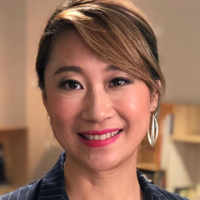
Pascale Fung is renowned for her expertise in conversational AI, ethical AI, affective computing, statistical NLP, and human-machine interaction, particularly through the medium of spoken language. She influences policy through her roles with the United Nations Advisory Body on AI Governance and the Global Futures Council, a think tank for the World Economic Forum. She is a Fellow of AAAI, IEEE, ACL, ISCA, and the recipient of Outstanding Paper Awards from ACL and EACL.
Economics of Technology Professor, Graduate School of Business, Stanford University
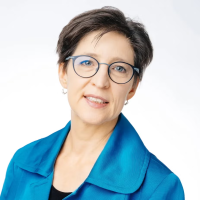
Susan Athey’s current research focuses on the economics of digitization and the intersection of causal inference and artificial intelligence. She has worked on several application areas, including timber auctions, internet search, online advertising, the news media, labor market transitions, health, and digital technology for social impact. She is a Fellow of the Econometric Society, the American Academy of Arts and Sciences, a Distinguished Fellow of the American Economic Association, and has received the John Bates Clark Medal and the R.K. Cho Economics Prize.
Rampell Family Professor of Computer Science and Statistics, Harvard University; Co-director, Kempner Institute
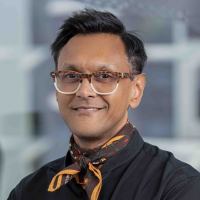
Sham Kakade’s research advances both the theory and practice of AI and deep learning. His thesis established core statistical foundations of reinforcement learning, and his subsequent work developed the first provably efficient policy search methods and mathematical foundations for sequential decision making. His contributions to ML and AI include scalable training methods for large language models and foundation models, tensor methods for latent variable estimation, and foundational theory for deep learning (feature learning, memorization, emergence). He has received the ICML Test of Time Award and the INFORMS Revenue Management and Pricing Prize.
Executive Vice President and Head of Genentech Research and Early Development, Genentech
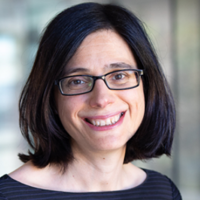
Aviv Regev oversees all aspects of gRED’s drug discovery and drug development activities, including the integration of AI/ML into drug discovery in a “Lab in the Loop.” Her own research has pioneered experimental methods and computational algorithms to decipher intra- and intercellular circuits in cells and tissues in health and disease. She is a member of the National Academies of Sciences and Medicine, as well as the American Academy of Arts and Sciences and the Royal Society. Her numerous awards include the Keio Medical Science Prize, the L’Oréal-UNESCO For Women in Science International Award, and the Lurie Prize in Biomedical Sciences.
Research Scientist, Google DeepMind
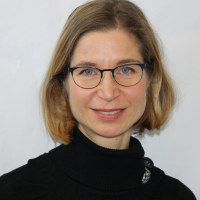
Verena Rieser leads research into the responsible development and alignment of frontier AI models. Her work takes an interdisciplinary approach to develop conversational RL agents, advanced evaluation methodologies, and sociotechnical alignment. She is a Leverhulme Trust Senior Research Fellow, an honorary professor at Heriot-Watt University, and a two-time finalist leader of the Amazon Alexa Prize.
Professor of Computer Science, Princeton University; Director, Center for Information Technology Policy
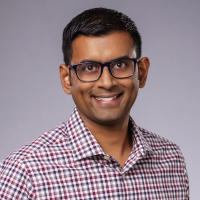
Arvind Narayanan’s research studies the societal impact of digital technologies, especially AI. Some interests include the science of AI agent evaluation, the impact of AI on institutions and professions, algorithmic amplification on social media, and fairness and ethics in computing. He has co-authored the popular book AI Snake Oil, the essay AI as Normal Technology, and a widely-read newsletter by the same name. He was one of TIME’s inaugural list of 100 most influential people in AI, is a recipient of the Presidential Early Career Award for Scientists and Engineers (PECASE), and a two-time awardee of the Caspar Bowden PET Award.
We look forward to the perspectives and insights these speakers will bring to ICML 2026. Further details on talk topics and scheduling will be announced in the coming weeks.